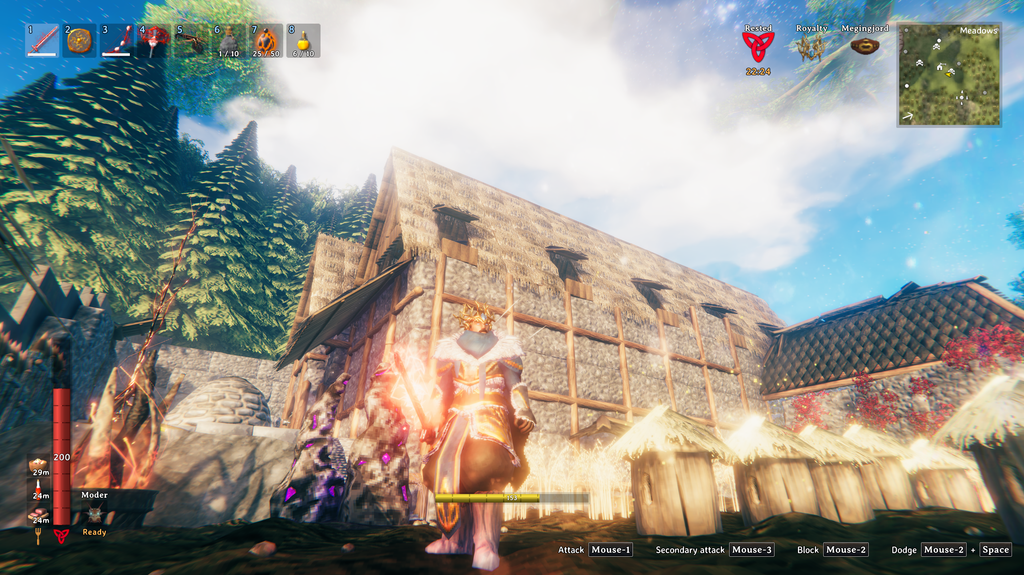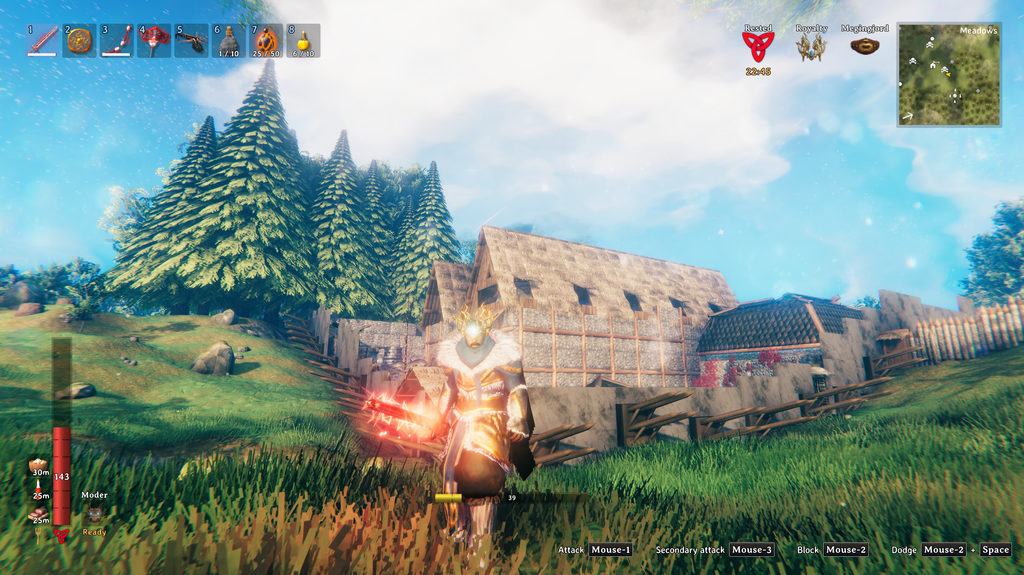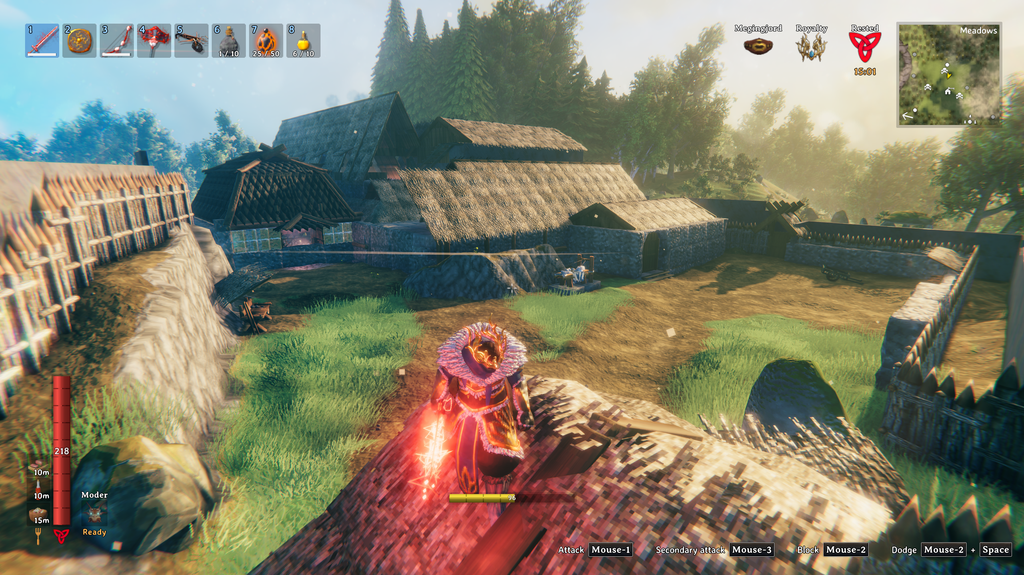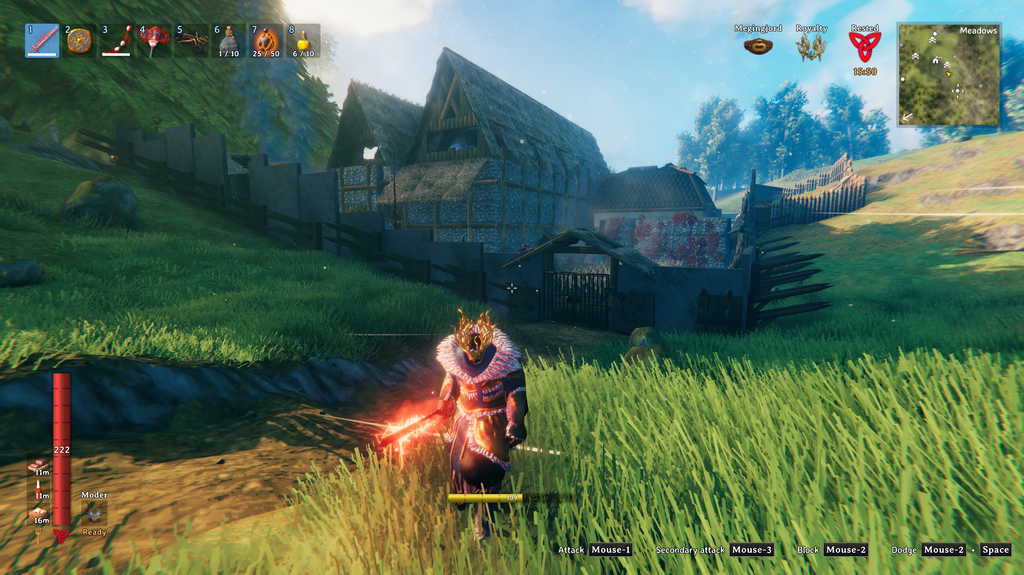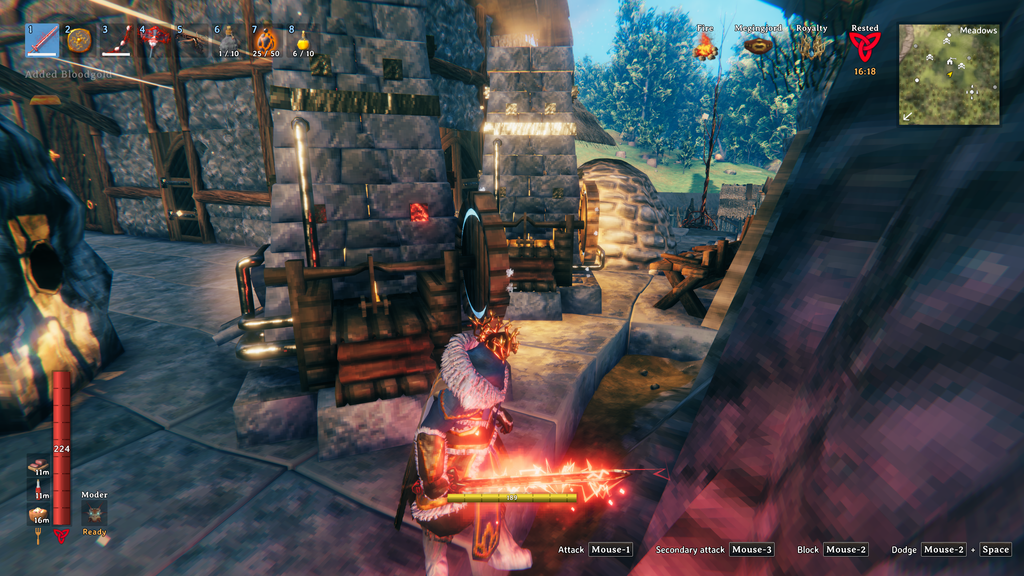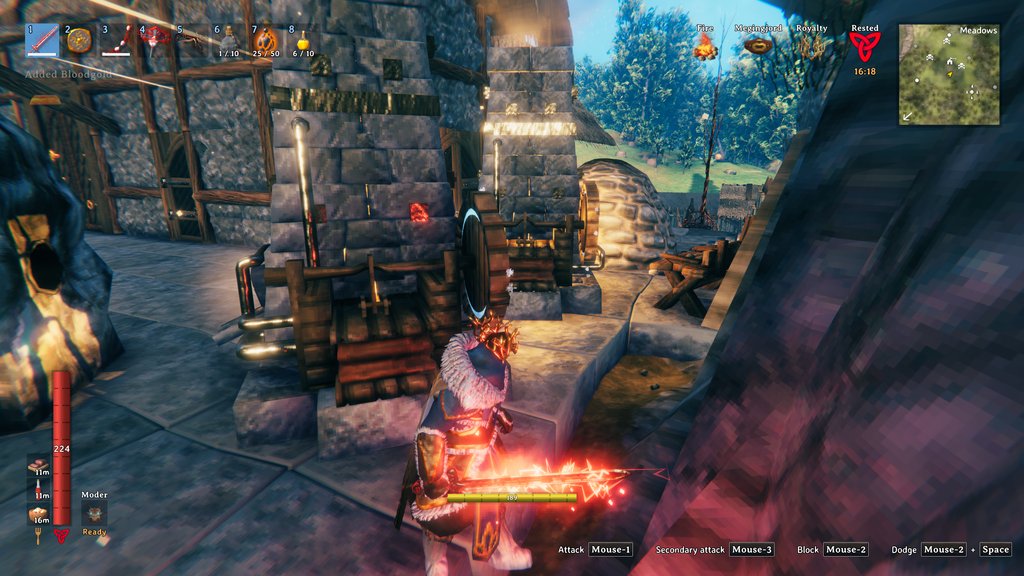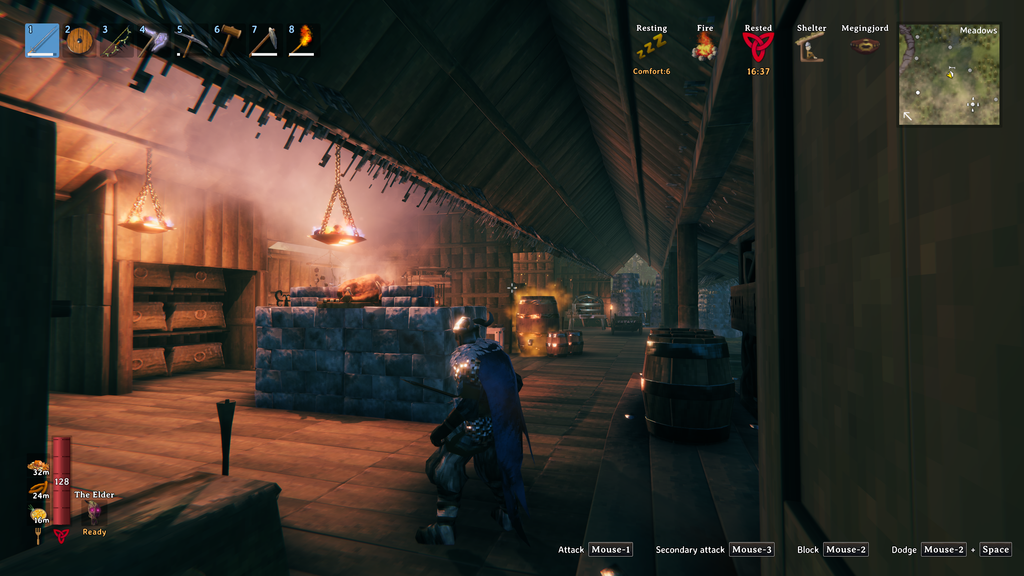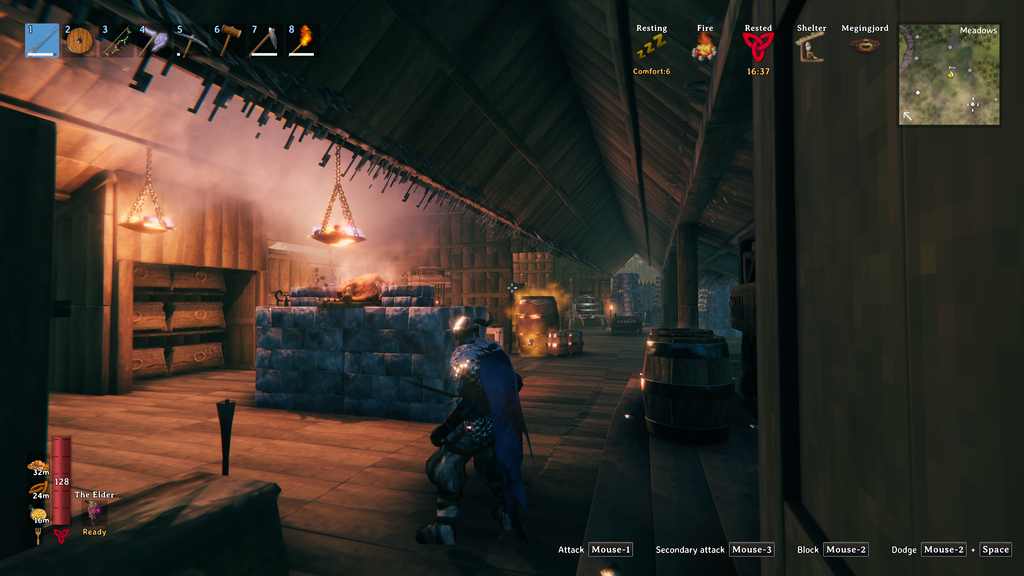
Valheim recently completed it’s long journey of development with the release of 1.0 and the final biome The Deep North. This is a recap of our time with this iconic genre defining game.
The game has changed substantially since purchasing it on early access four years ago. Over those years my husband Garrett and I have played 566 hours, with the most recent 80 or so from the past month.
The game for sure does not that take long, in fact we decided to start over again whenever new content was released so we could apply what we learned from last time to the new play through.
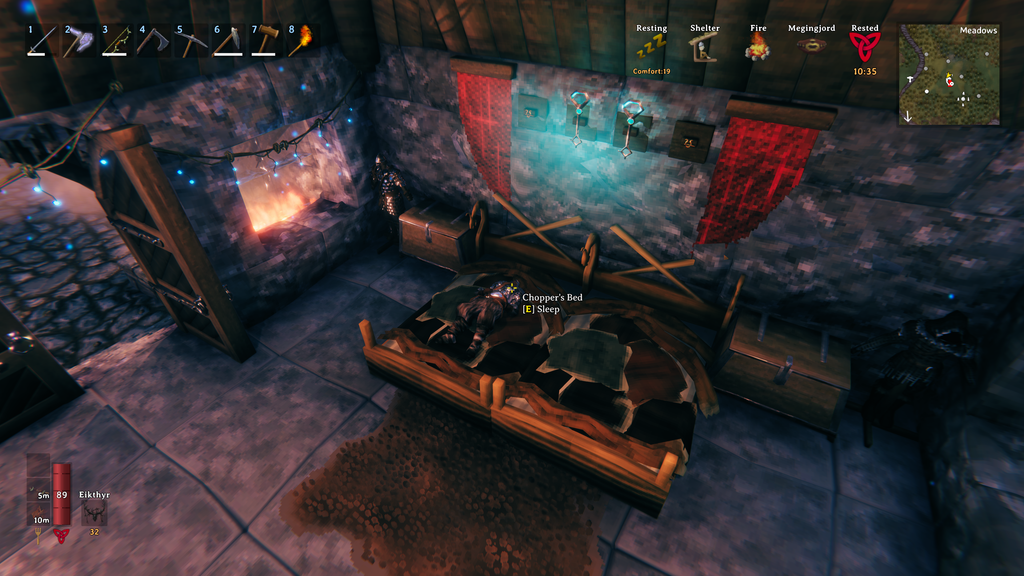
I’ll never forget our first outing in Valheim. We didn’t know how any of the mechanics worked. Building our first house was a clusterfuck of confusion.
We didn’t know we had to sleep next to a fire, or that a fire required ventilation. It was a hilarious first night of scrambling to get the house sorted while Greylings walked out of the darkness to terrorise our naked and unarmed player characters.
Eventually we learned our way around the Meadows biome and began venturing into the Black Forest for the first time. This is probably the game’s most iconic biome with an atmosphere that reminds me of the Lost Woods from Zelda Ocarina of Time.
In our first couple of play throughs, we learned that we could fight the wilderness with infrastructure. Routes back to our base went from being a harrowing run through the trees and shrubs to a comfortable walk. All we had to do was build roads out to our remote outposts.
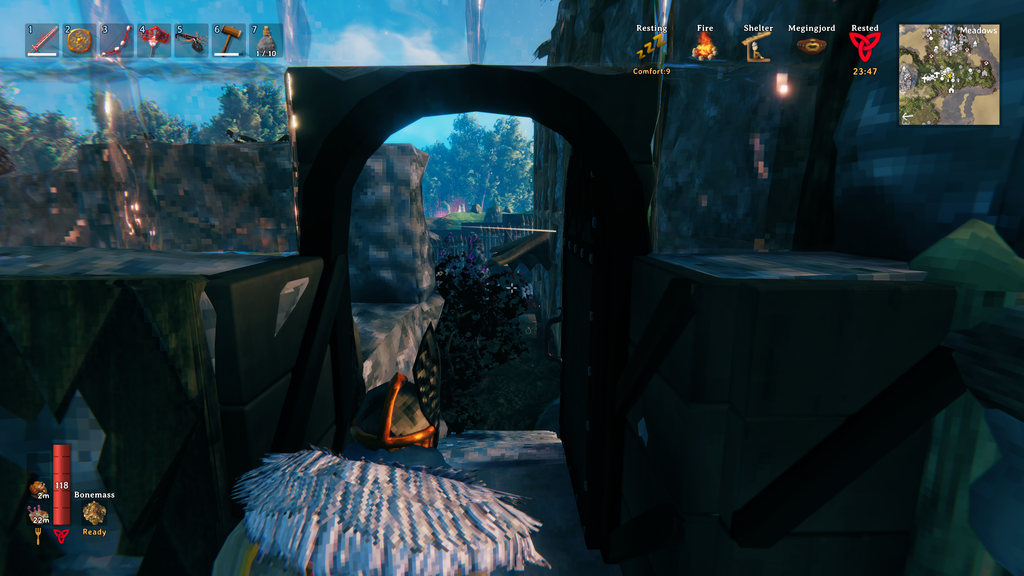
Back then, we were so afraid of the Black Forest that we built a wooden passageway through the forest that allowed us to safely move copper from the mining site to our home. It even went uphill using an incredibly massive staircase. This worked really well until a troll came along and smashed it up.
Eventually we learned that the same protection as our tunnel could be accomplished by creating WW1 style dug outs through the terrain instead. This approach saved on materials, gained other materials from digging and massively sped up our traversal of the map. It’s a lot easier to walk around encumbered when you don’t have to cross unfamiliar terrain.
Portals are introduced in the game early on, and we made good use of them to make our journey across the map more efficient. We’d portal out to our mining sites and then walk metals back along roads. Roads that sometimes even had strategically placed rest stops to hide from the rain and recoup.
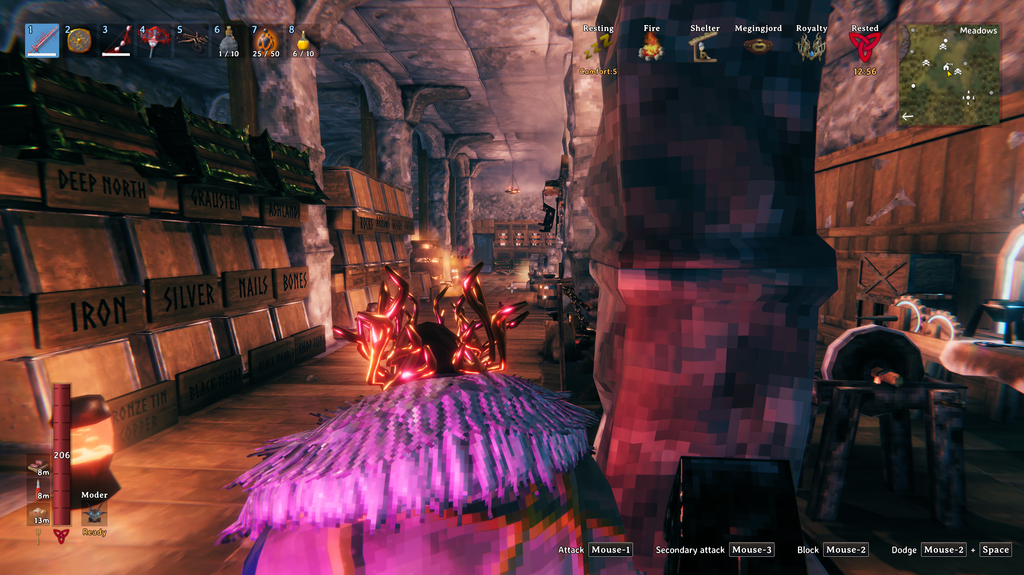
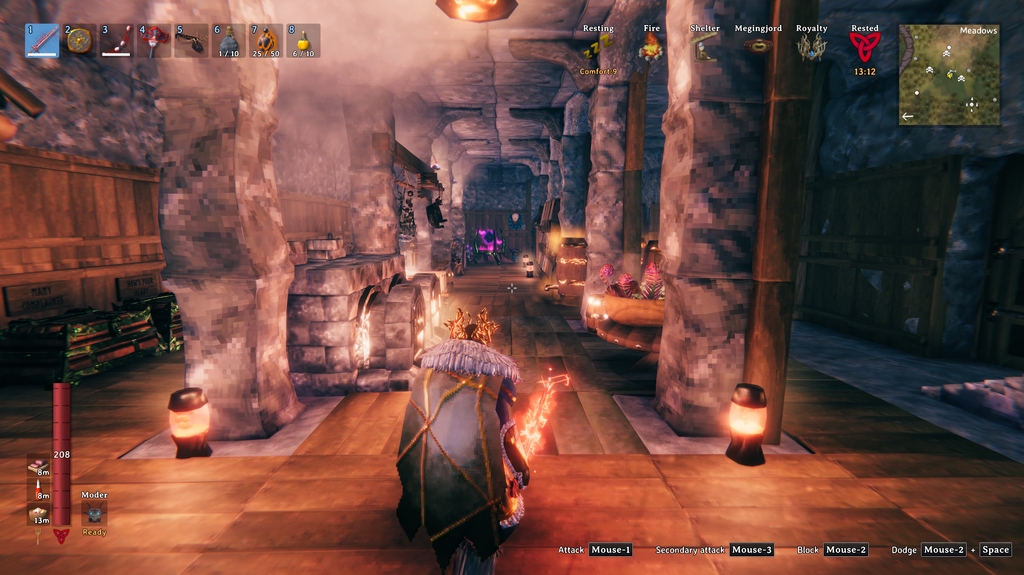
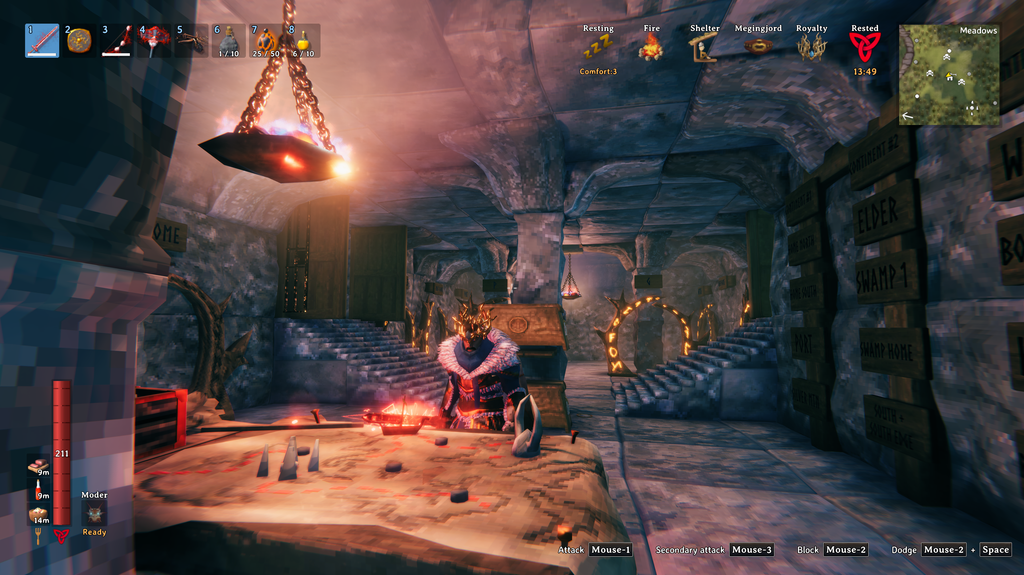
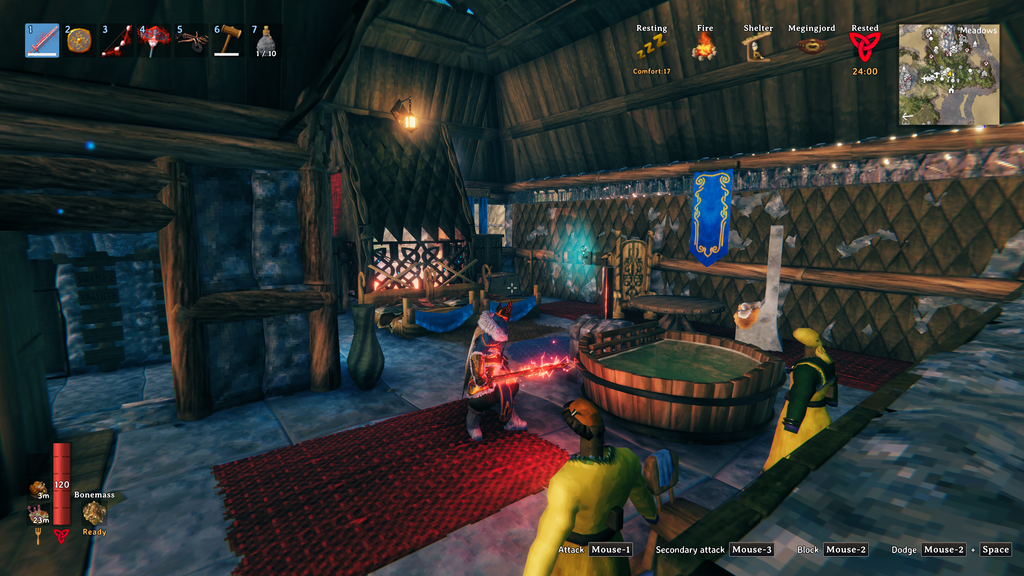
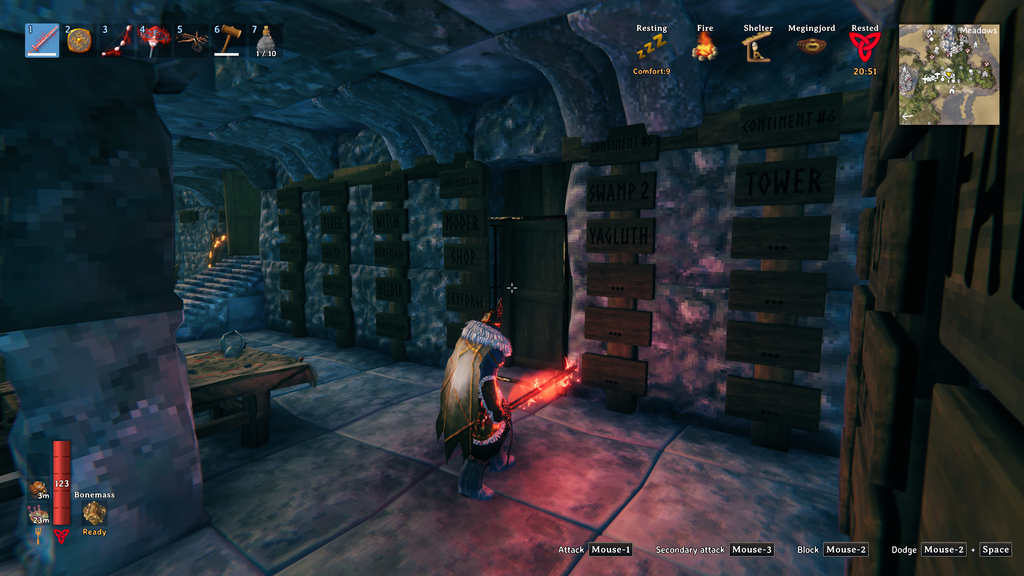
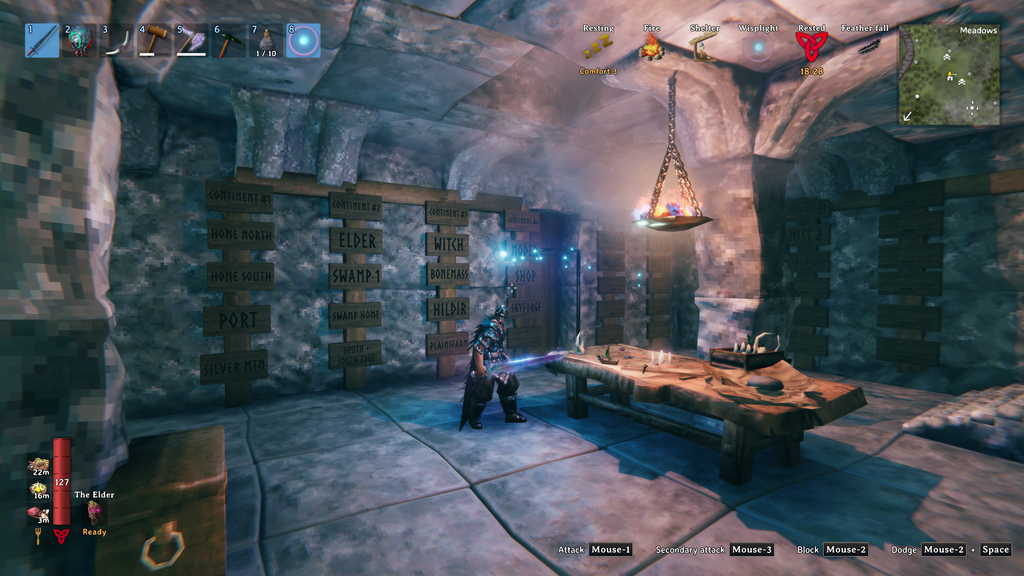
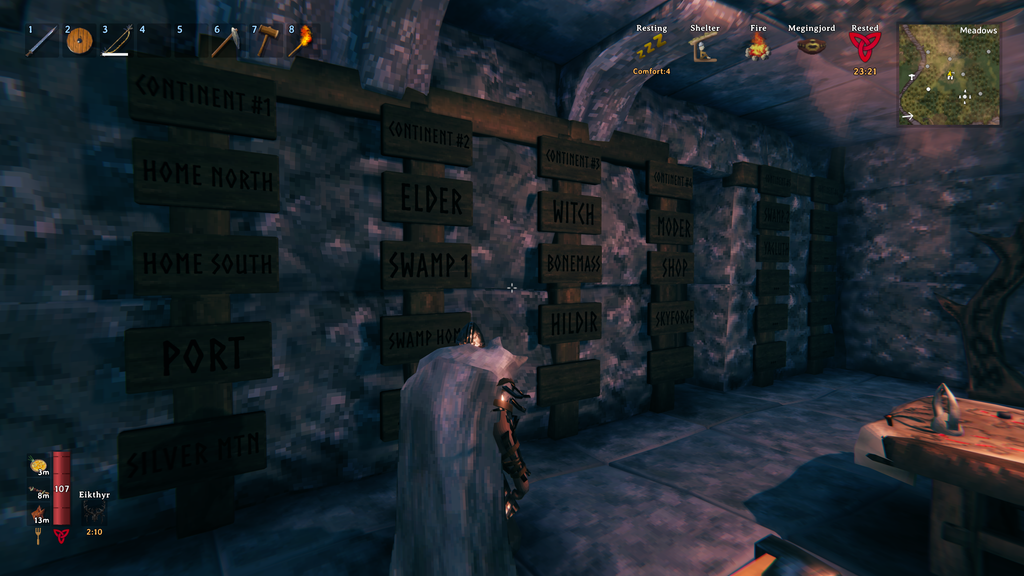
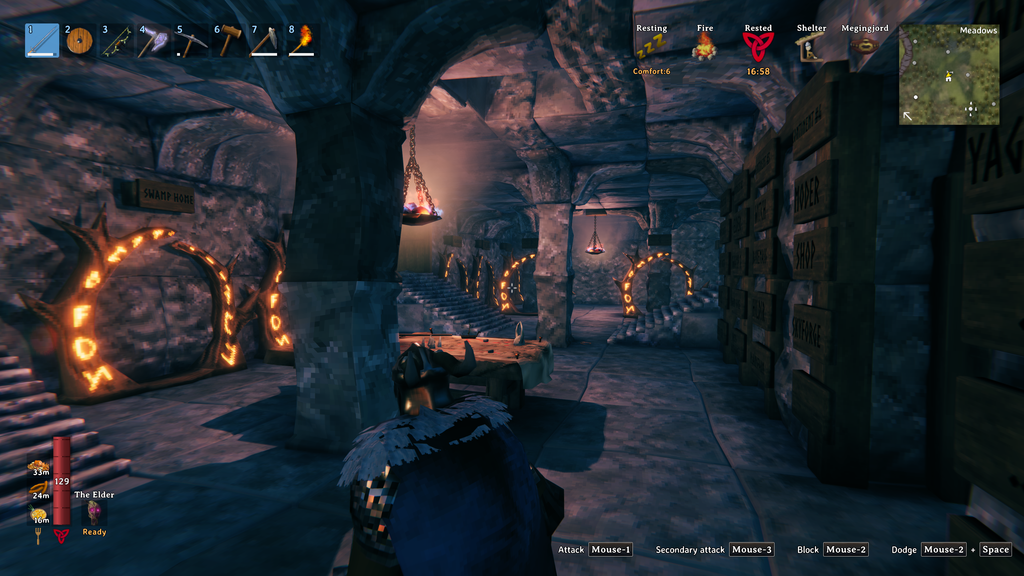
The portal room became a staple of our base building, containing strategic chests with exploration items such as the boat and materials to deploy new portals when we found new points of interest. As the number of portals we had to maintain grew exponentially, we began to find it challenging to both find room for them in the base and supply all the materials needed to keep adding more.
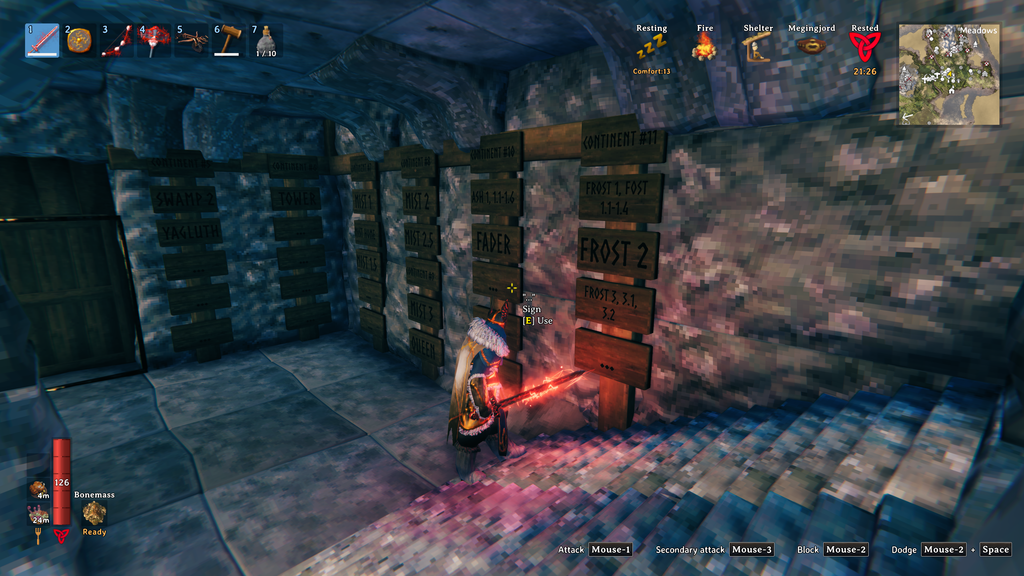
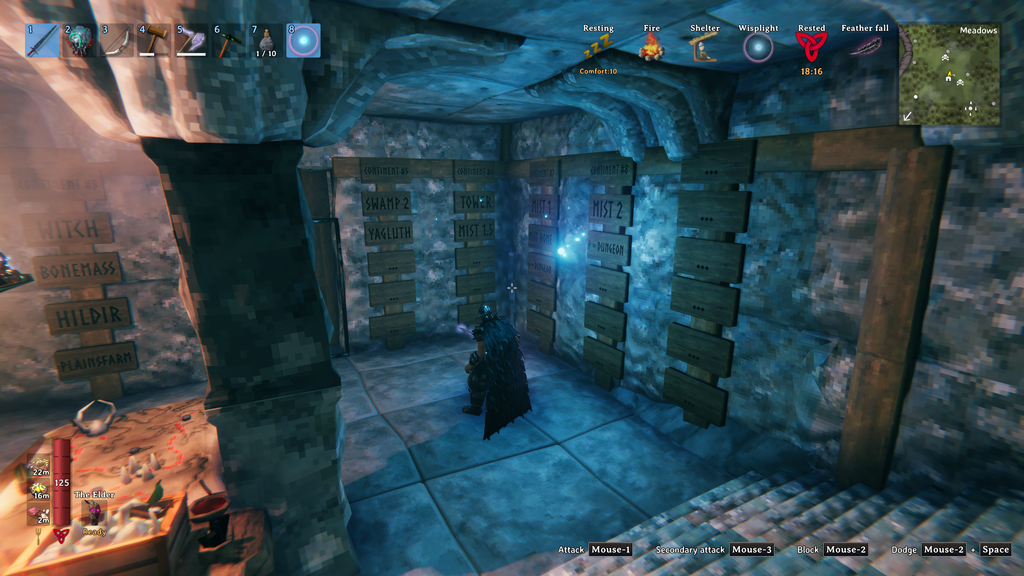
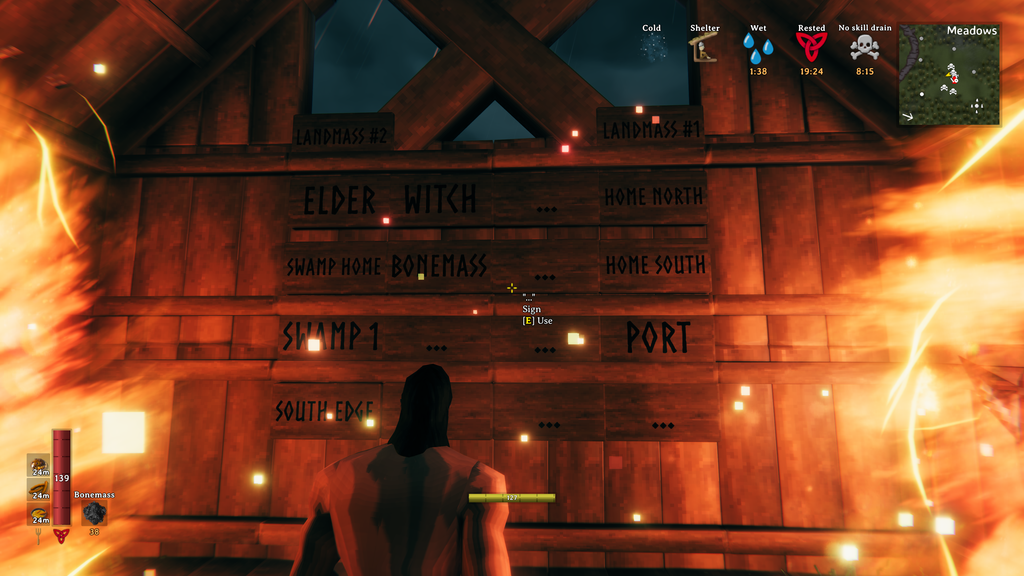
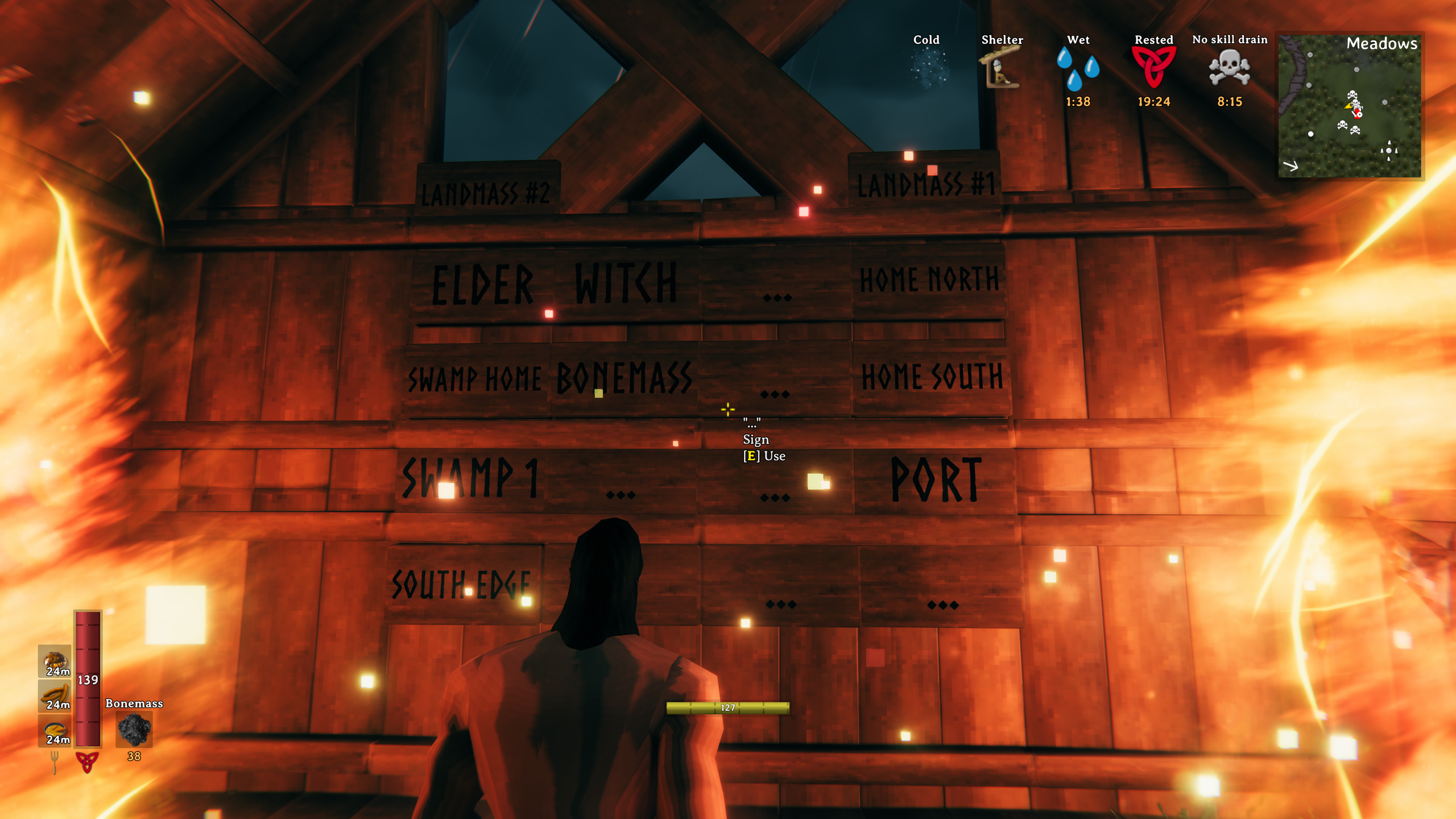
We eventually decided to start disconnecting less frequently used portals and wrote their names on the walls of the portal room, allowing us to reconnect later. This was loosely inspired by the same idea in Stargate SG-1 where it turned out the Goa’uld had written the addresses of all the Stargates in their domain on the walls of a temple.
A lot of the game’s bosses are scattered around the map, sometimes far away from the player’s main area. If the spawn location for a boss was too far, we’d simply setup a portal in a nearby safe location. And I have to stress the importance of making sure there is not only a safe distance but natural protection for your return portal. Because as we found throughout multiple boss fights, if they follow you back to your portal they could break it and leave your companions stranded in a solo fight with the boss.
After the Black Forest comes The Swamp, the spookiest biome in the game. I’m so glad to have figured out that we could fight the natural terrors and inconveniences of the environment with infrastructure prior to entering the swamp. From raising watery bogs to become paths to building fences to block line of sight with faraway Draugrs, we incrementally developed a strategy for operating safely within this deeply unsettling biome. Of course, once you have more powerful equipment the place is just another weather pattern, but it is still quite intimidating in the early game even for experiened players.
When it came to fight the Swamp’s boss Bonemass, we flattened the surrounding area and built a little fire in the mouth of his altar to keep us dry. This worked great, and provided us with a much needed advantage. Following Bonemass’ defeat we made our way to the mountains where the game began to really change things up.
The Mountain biome is absolutely stunning, whether it’s a clear sunny day with the bright whites of the environment reflecting the sunlight or a blinding snowstorm that you can barely walk through. The music does a lot to establish that grandeur of the mountain as well.
When Garrett first learned we could tame wolves and use them as guards for our base, we immediately gained a new base staple. Although it became less practical later on as the enemies who attacked our home got more powerful. The wolves were challenging to replenish if you lost your breeding pair because you had to walk them home from the mountains.
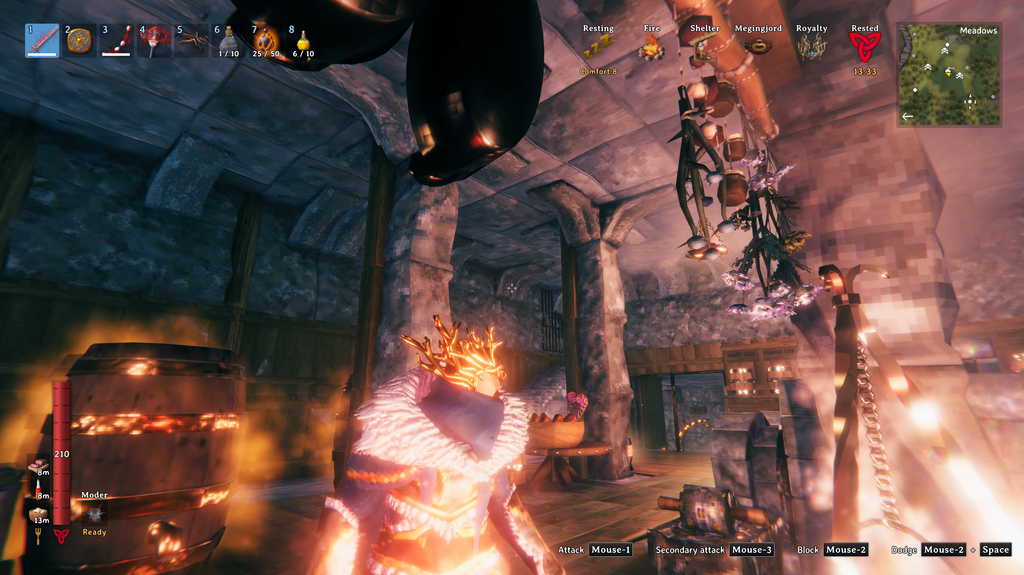
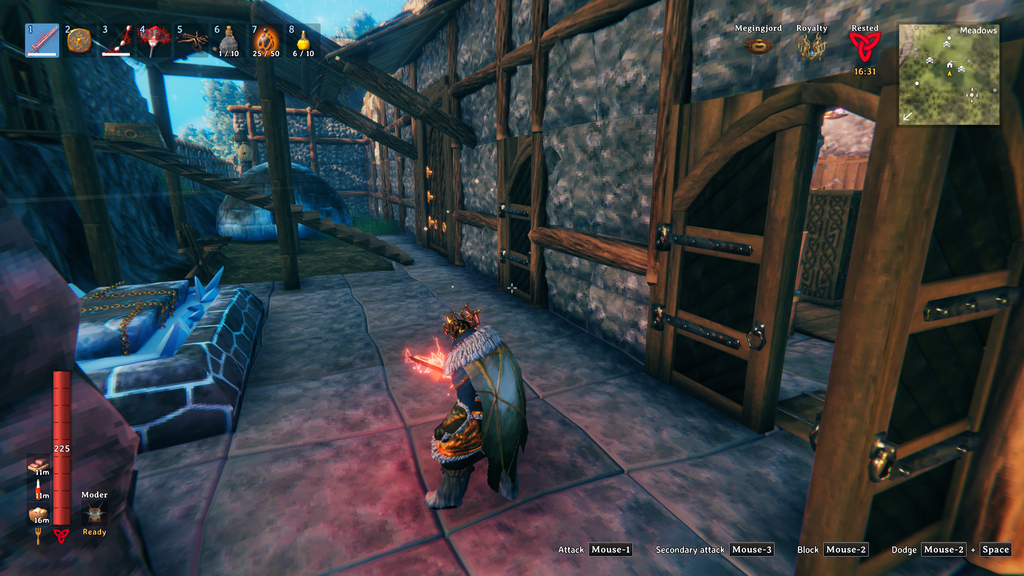
My favourite part of being in the Mountain area is carving bases and passageways into the very large rocks that often connect to each other. In our final playthrough I’d essentially moved through the mountain like a bark beetle, eating my way through the terrain to avoid predators and returning home via a portal hidden deep inside the rock. It was a highly efficient way to get stone back to the main base.
Once the Mountain’s boss Moder is beaten, we set of for The Plains. This meant having to sail to an adjacent landmass due to the games map generation rules. Essentially, the more advanced biomes, after Mountain, spawn further from the center of the map, which is where you start the game off. This approach to the distribution of biomes necessitates sailing. Sailing in Valheim can be both extremely tense when negotiating safe passage through rocks and shallow areas, and also very boring when you find yourself circling a landmass looking for a way through it.
The Plains biome is extremely stressful when you first get there because you don’t have enough protection to survive the heavy piercing damage of the Deathsquito. These bad guys were notorious for slaughtering players, killing many, including us, with a single or two shots. Often times you’d be fighting something else in the Plains and a Deathsquito would just waltz into the scene and finish you off. Our strategy for landing on new landmasses was to setup our portal in a safer biome like Meadows or Black Forest, and then walk over to the nearby Plains.
Due to limitations in where you’re allowed to grow certain crops, we had to build a base in The Plains for farming. This was not too bad once we figured out to build tall stone walls around the area to protect it from the local wildlife. If the walls were tall enough even the Deathsquitos didn’t cross it unless they were already tracking you from behind the wall.
The Plains is probably the last conventional biome before things get really challenging. We had to end our first playthroughs early because the Mistlands biome wasn’t ready yet. I remember how excited I was to finally play it after all the teasing the developers had done online for months.
Starting a brand new playthrough for Mistlands, we started over with a new kind of base that had a massive moat around it. This was the only playthrough we did this as the moat boxed us in more than it helped keeping enemies out. It turns out that when flying dragons and trolls who can throw trees attack, they don’t really need to get in to do damage.
Mistlands is my favourite biome in the game, simply for the atmosphere of magic and the soundtrack. Don’t get me wrong, it’s potentially also the toughest biome in the game because the terrain is so vertical and it’s always wet, meaning your jumping is constantly nerfed. But there’s just something magical about chasing scaley rabbits, meeting the Dvergr for the first time, exploring Dvergr settlements and taking over the abandoned castle that spawns around the Queen’s entrance.
The Queen is Mistland’s boss and once she’s defeated you can set off for Ashlands. When we first defeated the Queen, Ashlands wasn’t ready yet and so it wasn’t until our next playthrough that we set off for what essentially felt like a rendition of hell.
The developers did a good job creating the unique atmosphere of war in the Ashlands biome. It is so incredibly hostile, you can’t even build regular wooden structures because the raining embers from the sky set it ablaze. The whole place feels like a 1980s heavy metal music video, from the hoardes of enemies who pour out of fortresses when you break them open with siege weapons to fighting the Valkyrie’s with their magical attacks.
Knowing that the Ashlands boss Fader wouldn’t give us an item because the next biome wasn’t ready, we held off from fighting him that play through. We hung up the game for another 2 years, waiting patiently for the final biome the Deep North to be ready.
We returned to Ashlands in our final playthrough this year and defeated Fader, although it was a particularly challenging fight. It took us nearly two hours of real world time to get his health down as we struggled to figure out a strategy to survive his AoE green flame attacks. Neither of us had specialised in the biomes Askvin speed enhancements, which may have been a factor.
Despite putting the portal what seemed like a safe distance away, we found ourselves having to frantically rebuild it and relocate it several times before the fight with Fader was done. But eventually, after a lot of swearing and frantic running we prevailed and were ready to bring our Valheim experience to a conclusion.
Sailing in the opposite direction from Ashlands, we reached the Deep North and were immediately surprised at the change of pace from the last biome. Where Ashlands had a permanent sense of chaos, combat and danger the Deep North was the complete reversal of that. It was calming, mysterious and beautiful to be within.
I was surprised the Deep North didn’t require any extra cold protection, the developers instead made the biome’s limitation based around the thick snow. You had to use a magical shovel to plow it before you could build anything. To our delight, we’d somehow stumbled upon a continent that had every important point of interest on one landmass. This meant we didn’t do any sailing between areas in the Deep North which was very handy.
The atmosphere of the Deep North really deserves special mention. It feels like a reward after all the challenges in previous biomes from the Mistlands limited visibility and verticality to the Ashlands overall apocalypse and hell vibe. Even the dungeons are kind of charming – there’s the dark castle style Morkhalla filled with trained soldiers and wizards and the Winding Tunnels, filled with imps. I particularly like the large town buildings that the Windings Tunnels entrances are in, whenever we spotted a new one I’d drop our stone portal in their as the main chamber provided a great shelter from the wildlife.
Once we had gathered all the requirements and fully upgraded our gear with all the advancements the Deep North had to offer, we entered the final boss fight with Kall Fimbulbringer. Surprisingly, this fight wasn’t as tough as Fader. In fact it probably wasn’t even as tough as Queen. I think we each only died once and it was trivial to return because of our portal being right outside the entrance to his chambers.
In a cruel and unusual twist from the developers, we had to sail Fimbulbringer’s blood home. Despite giving us a new type of portal a biome ago, it seems the developers wanted us to reflect on our journey with one last trip across the seas. I understand the logic behind it, but it still felt like a bit of a bummer delaying our completion of the game with something that was just long and tedious.
Once we finally got Fimbulbringer’s blood onto Odin’s altar where the whole game began in the first place, we got to watch the closing cutscene, bringing our years long play of this game to a close. I really wish the developers hadn’t made us sail at the end there. That 30 minute diversion after a boss fight really soured the sense of satisfaction we felt in the moment.
Looking back at our time in Valheim, I’m grateful for the experiences those years of playing the game gave us. I’d spent over half a thousand hours adventuring with my best friend in a procedurally generated world like no other. Valheim was a second home for us these past few years, especially given the physical limitations we’ve had to contend with since Garrett’s spinal injury. It was a place where we could run around together and go on adventures at a time when Garrett couldn’t even walk down the street or come to the park with me and the dogs.
Sure the game had some unusual choices that re-enforced the grinding, but I also think having to think for yourself and come up with your own logistics and infrastructure is a victory of an open world sandbox crafting and survival game.
The experience in Valheim has made me appreciate the challenges and benefits of building infrastructure in the real world more. We recently moved to a more remote suburb by the beach, and while the immediate area we live in is nicely developed there is a lot of wilderness around us and fewer services and options. That scarcity makes what we do have more precious, and we do what we can to support local business.
Garrett’s doing better now by the way, he had his surgery a year ago and we’re planning many new adventures. Some virtual, but a lot of them in the real world now that it’s finally within our reach.
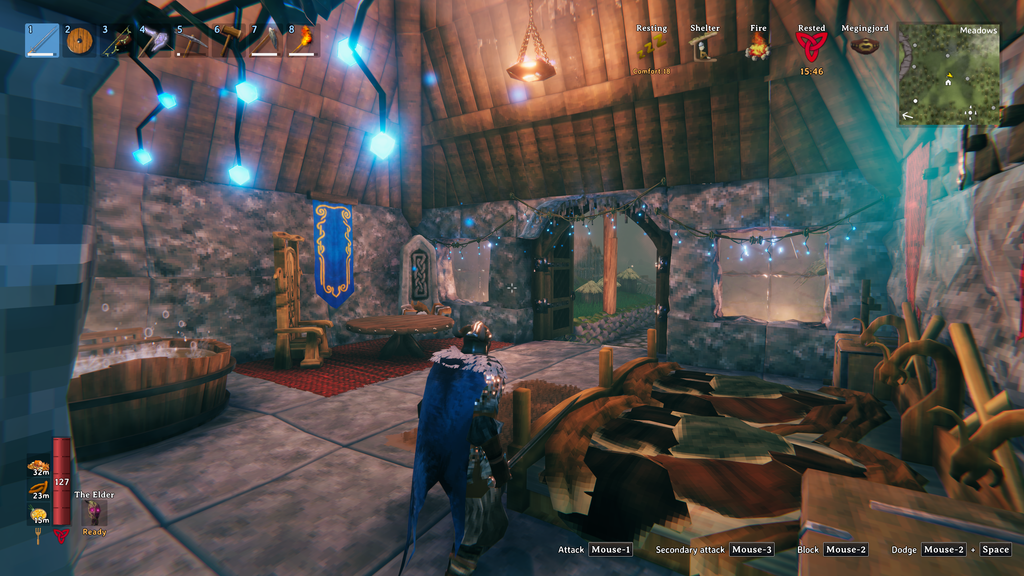
During this final playthrough, I took the time to screenshot things knowing it was gonna likely be our last time here. I loved our time in Valheim, even if it wasn’t perfect I’ll never forget the time we spent in that world.